How Quickly Can Mold Form After a Flood in Highland Springs?
The clock starts when the water arrives, not when you first notice a smell, so the first day of drying matters more than any other.
How quickly can mold form after a flood?
Mold can begin growing within 24 to 48 hours after a flood, often before you can see it. Wet drywall, carpet pad and wood framing give spores what they need, and warm, humid air speeds things up. Getting water out and drying started on the first day is the most reliable way to stop it.
What happens in the first 48 hours
Mold spores are already in every home, resting on surfaces and floating in the air. They stay dormant until they find moisture and something to feed on. Floodwater supplies both at once, because the paper face of drywall, the wood in baseboards and subfloors, and the dust trapped in carpet are all food.
The timeline below is typical for a flooded room that is left to dry on its own. Every house is different, but the pattern is consistent.
- First few hours: water wicks up drywall and soaks into carpet pad, often well above the visible waterline.
- Within a day: the air turns heavy and damp, and a musty smell can start as spores become active.
- 24 to 48 hours: growth can begin on the back of drywall, under carpet and inside wall cavities where you cannot see it.
- After several days: colonies can become visible as spots or fuzz, and porous materials may no longer be worth saving.
What makes mold grow faster in your home
Temperature and humidity set the pace. Warm, still air holds moisture against wet surfaces, and a long, humid Virginia summer gives a flooded room very little chance to dry out by itself. Opening windows on a muggy day can actually add moisture rather than remove it.
Materials matter just as much. Some take on water and release it slowly, which is why they are the first places we check.
- Drywall and its paper facing, which wicks water upward and stays damp inside the wall
- Carpet pad, which holds water like a sponge long after the carpet surface feels dry
- Unsealed wood such as baseboards, door casings and subfloor sheathing
- Insulation and the framing in crawl spaces, where air moves very little
- Anything touched by dirty floodwater, which carries extra organic material for mold to feed on
What to do first after a flood
Start with safety. If water has reached outlets, cords or the electrical panel, keep out of the room until the power is off. Floodwater from outside or from a backed-up drain should be treated as contaminated, so wear gloves and boots and keep children and pets away.
Once it is safe, the goal is to stop the clock. Small steps you take in the first hours make the professional drying work faster and keep more of your home's original materials in place.
- Photograph the water and the damage before you move anything, for your insurance claim.
- Lift rugs, cushions and boxes off wet floors and move them to a dry room.
- Pull furniture away from walls and set wood legs on foil or blocks to stop staining.
- Run your air conditioning if it is safe to do so, and keep windows closed on humid days.
- Call for water extraction and drying as early as you can, rather than waiting to see what dries.
Why surface drying is not enough
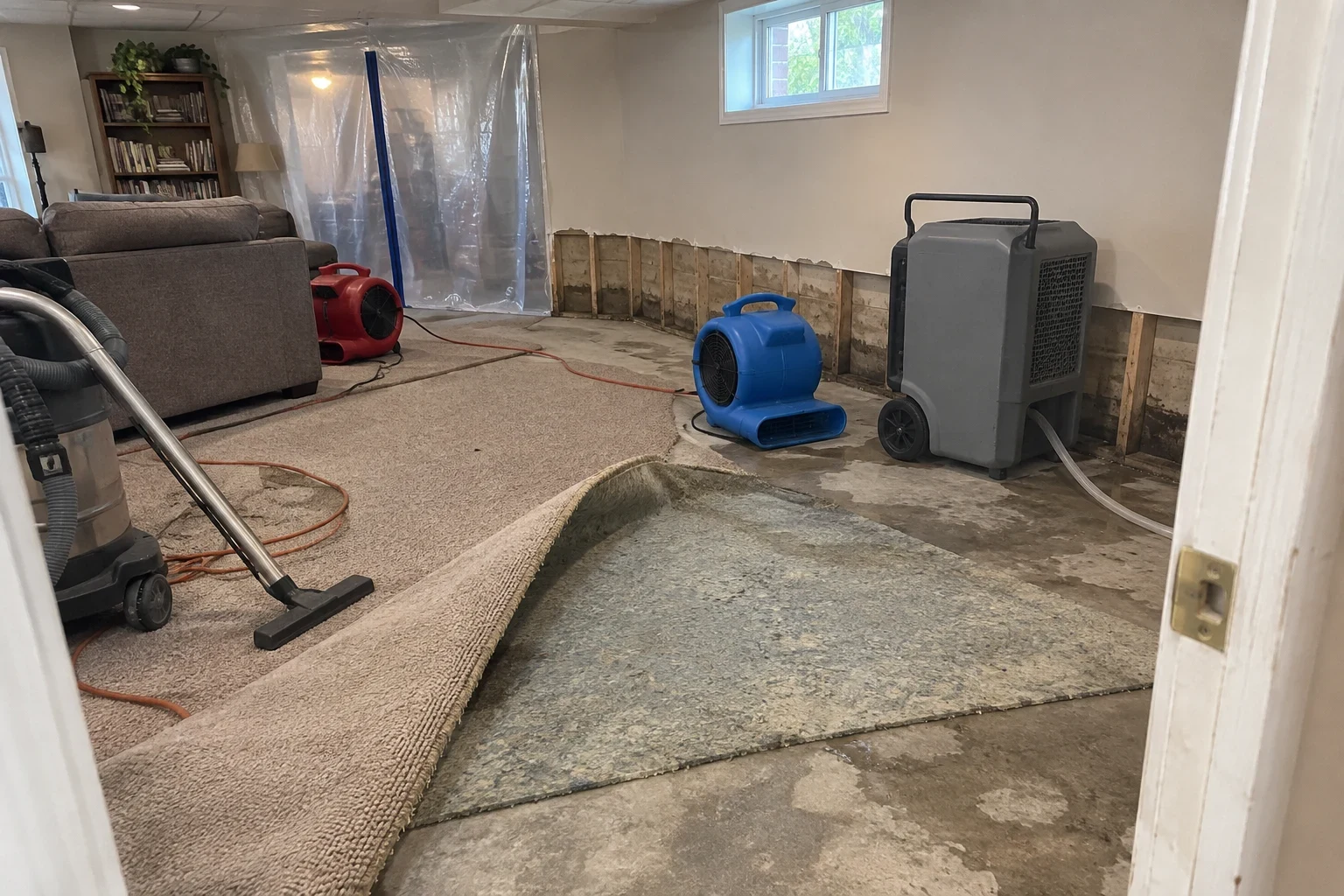
A floor can feel dry to the touch while the pad underneath and the bottom of the wall are still saturated. That hidden moisture is where mold usually takes hold. Fans alone move air across the surface but do little for water trapped inside materials.
Proper drying pairs high-volume air movers with commercial dehumidifiers that pull moisture out of the room, and it is checked with moisture meters each day rather than judged by feel. When readings in the walls and floors come back to normal levels, drying is done. Our drying and dehumidifying page explains how that equipment is set up and monitored.
If mold has already started, drying alone will not remove it. Affected drywall, pad and insulation are usually cut out and replaced, and the area is cleaned and contained so spores are not spread through the rest of the house. That is the work covered under mold remediation.
How we keep mold from getting a start
When you phone us, the first step is a free on-site inspection. We are on site in 60 mins or less, and we work through the house with moisture meters to map where the water actually went, including inside walls and under flooring. You see the readings and photos, and we explain what can be dried in place and what should come out.
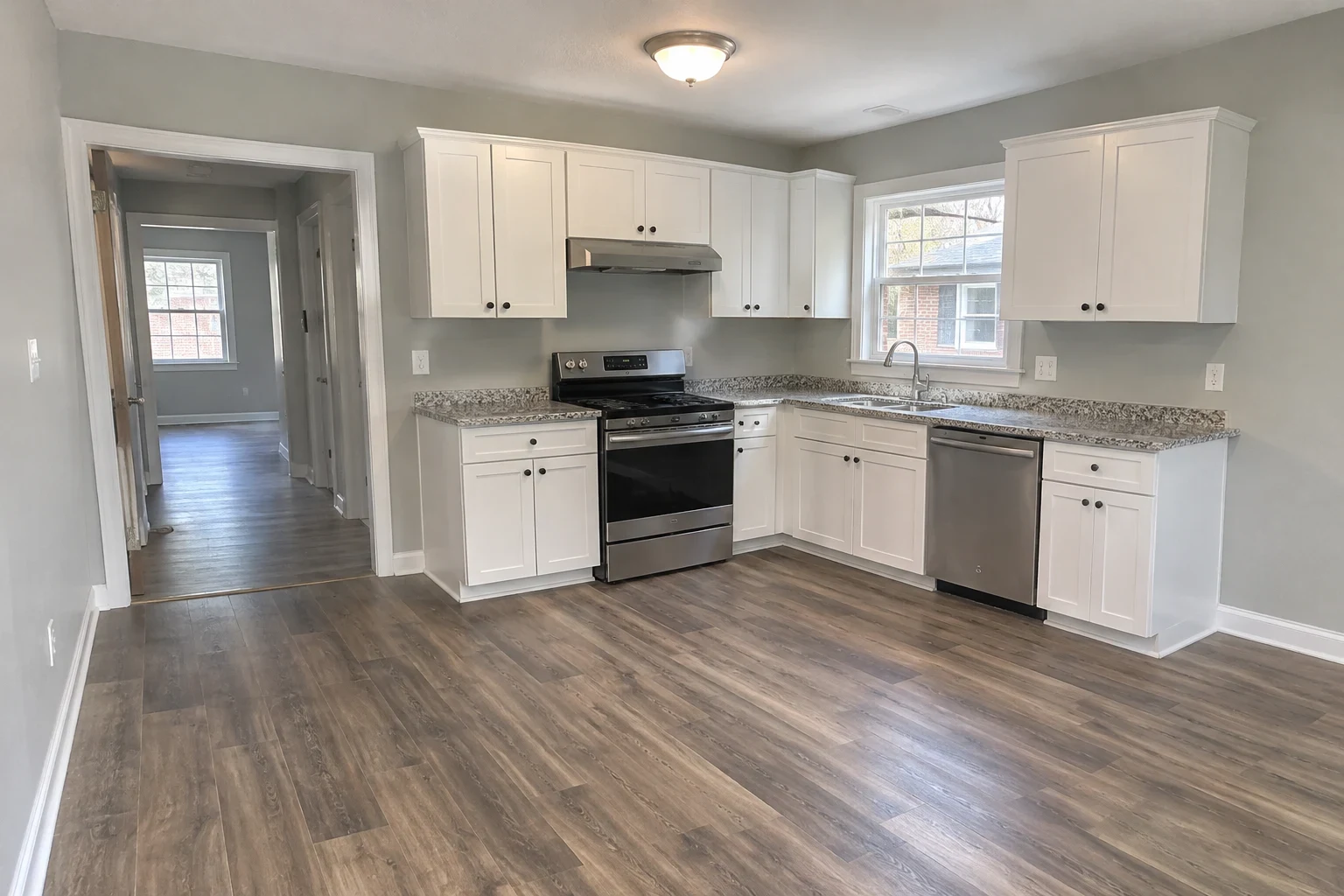
From there we extract standing water, set up drying equipment and check progress daily until the readings are where they should be. We protect floors and furnishings that were not affected, and we leave each room clean. If walls, trim or flooring need replacing, our repairs and rebuild work matches finishes with care so the room looks the way it did before. We work with most major insurance companies and can walk you through what your adjuster will want to see.
More questions about mold after a flood
Will bleach stop mold from growing after a flood?
Bleach can lighten stains on hard surfaces, but it does not reach into drywall, wood or carpet pad where mold actually grows. Removing the moisture is what stops growth, and materials that already have mold in them usually need to come out.
Does homeowners insurance cover mold after a flood?
It depends on your policy and on what caused the water. Flood from outside is often handled under separate flood coverage, and many policies limit mold coverage, so we document moisture and damage clearly and explain the process while your adjuster makes the coverage decision.
Can I stay in my home while it dries?
In many cases, yes, if the affected area is limited and the water was clean. If sewage was involved or mold is spreading, we will tell you plainly whether it makes sense to stay elsewhere for a few days.
How will I know the house is truly dry?
We take moisture readings in the same spots each day and compare them with dry areas of your home. Drying is complete when those numbers match, not when the surface simply feels dry.
Get water out before mold gets in
A phone call brings a free on-site inspection, with moisture readings and photos so you know exactly what is wet and what can be saved. If water is still coming in, ask for emergency water damage response, and we are on site in 60 mins or less.