ServicesSewage Cleanup
Sewage Cleanup in Highland Springs
Sewage is contaminated water, and treating it like an ordinary spill puts your family at risk. We isolate the rooms involved, take out materials that are past saving, sanitize the surfaces worth keeping and dry the structure fully, so repairs begin on clean, sound framing.
When sewage gets into your home
Water from a sewer line, a backed-up floor drain or an overflowing toilet carries bacteria and other contaminants. The industry classes it as Category 3 water, the most serious kind. It soaks into carpet pad, drywall, insulation and subfloor quickly, and anything porous it reaches usually has to come out.
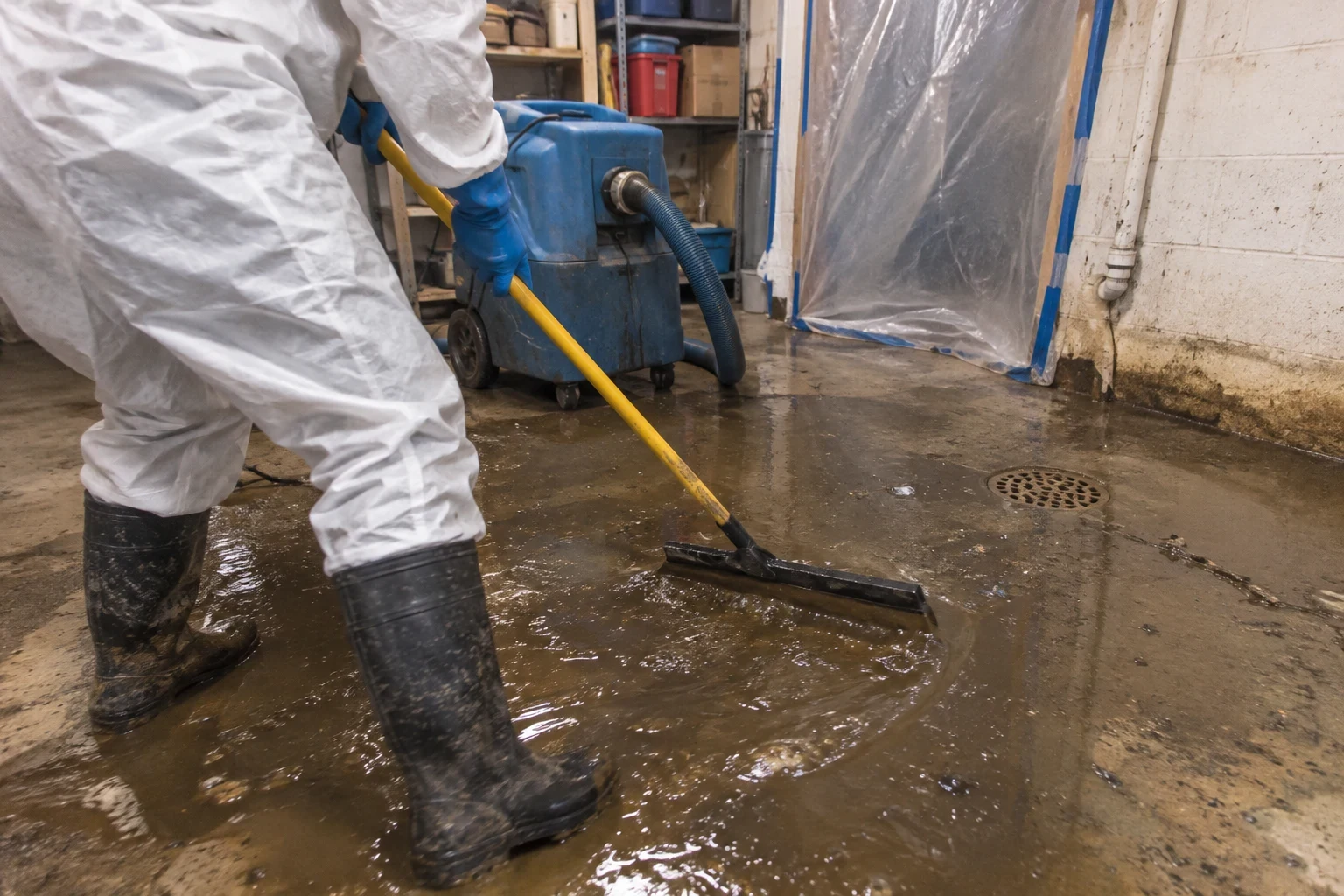
Our sewage cleanup follows a careful order: contain, remove, clean, disinfect, dry, then verify. We record photos and readings at each stage, so you can see what was affected and why each step was taken. If you are tempted to mop it up yourself, we would gently suggest holding off. Box fans and household cleaners tend to push contamination into rooms that were never touched.
Backups often arrive alongside a heavy storm, when you already have plenty to deal with. Our crew is on site in 60 mins or less to get things under control. On the paperwork side, we work with most major insurance companies and keep our records in a form adjusters can use.
What sewage cleanup includes
Containment and air control
Plastic sheeting goes up and air scrubbers run so contaminated air and dust stay out of the clean rooms in your home. We plan a single path in and out, so nothing gets carried down hallways.
Extraction of contaminated water
Standing sewage and solids are pumped out with equipment reserved for this kind of work. Waste is bagged and disposed of apart from your household trash.
Removal of porous materials
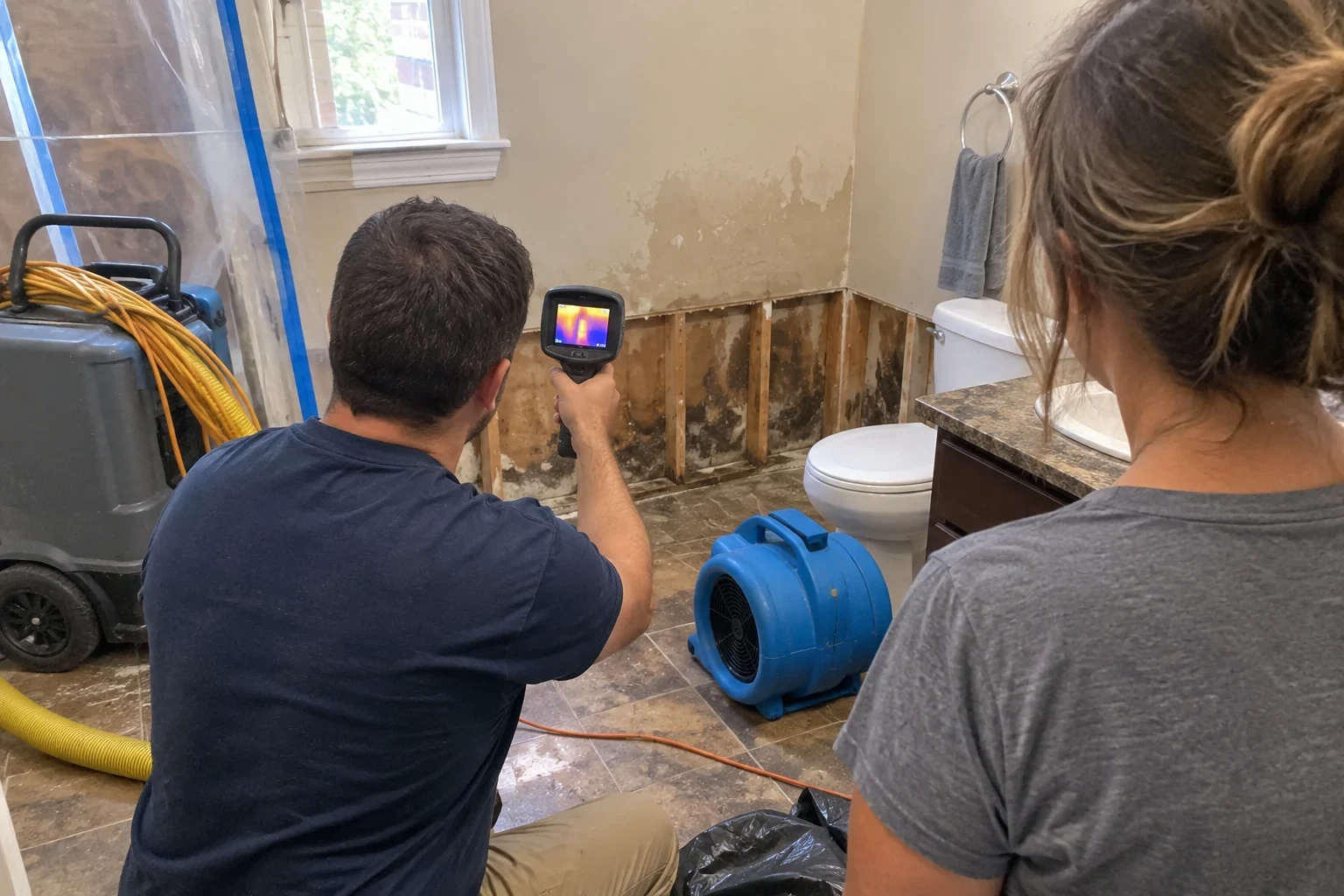
Carpet and pad, the bottom portion of drywall, wet insulation and soaked baseboards are cut out and hauled away. Moisture readings and contact marks decide what goes, and we show you exactly where we drew the cut line.
Cleaning and disinfection
Concrete, tile, framing and subfloor are scrubbed first, then treated with a suitable disinfectant. We sort contents into what can be cleaned and what cannot, and walk you through each group before anything leaves.
Structural drying
With cleaning complete, dehumidifiers and air movers are placed and we track moisture daily until the framing and subfloor return to normal readings. It is the same careful approach we use for drying and dehumidifying after any water loss.
Signs you need sewage cleanup
- Water rising from a floor drain
- Murky gray or brown water welling up from a drain in the basement or laundry area points to a blocked line or an overwhelmed municipal system. Heavy rain is a common trigger.
- Several fixtures backing up at once
- If the toilet gurgles while the tub or shower fills from below, the trouble sits in the main line rather than one fixture.
- A lingering sewer odor
- A smell that returns after you have cleaned can mean contamination is trapped under flooring or inside a wall cavity.
- Stained or soft flooring near a toilet
- Small overflows that repeat over months soak the subfloor well before anything shows on top. Discoloration or a soft spot underfoot deserves a closer look.
- Sewage in a crawlspace
- Older homes often have cast iron or clay lines that crack with age or let roots in. A leak under the house can saturate insulation and soil while nothing seems wrong upstairs.
How the work runs on the day
- 1
Inspection and safety check
We walk the affected area, take moisture readings and photos, and explain what we see. If power or gas near the water poses a risk, we deal with that first.
- 2
Seal the area and remove the water
Containment goes up before anything is disturbed. Then we extract the sewage and bag the debris for disposal.
- 3
Remove, clean and disinfect
Affected porous materials come out, and every remaining surface is cleaned and disinfected. We keep a written list of what was removed for your records and your insurer.
- 4
Dry and verify
Drying equipment runs until readings confirm the structure is dry. We do not close up walls or lay flooring over damp framing.
- 5
Plan the rebuild
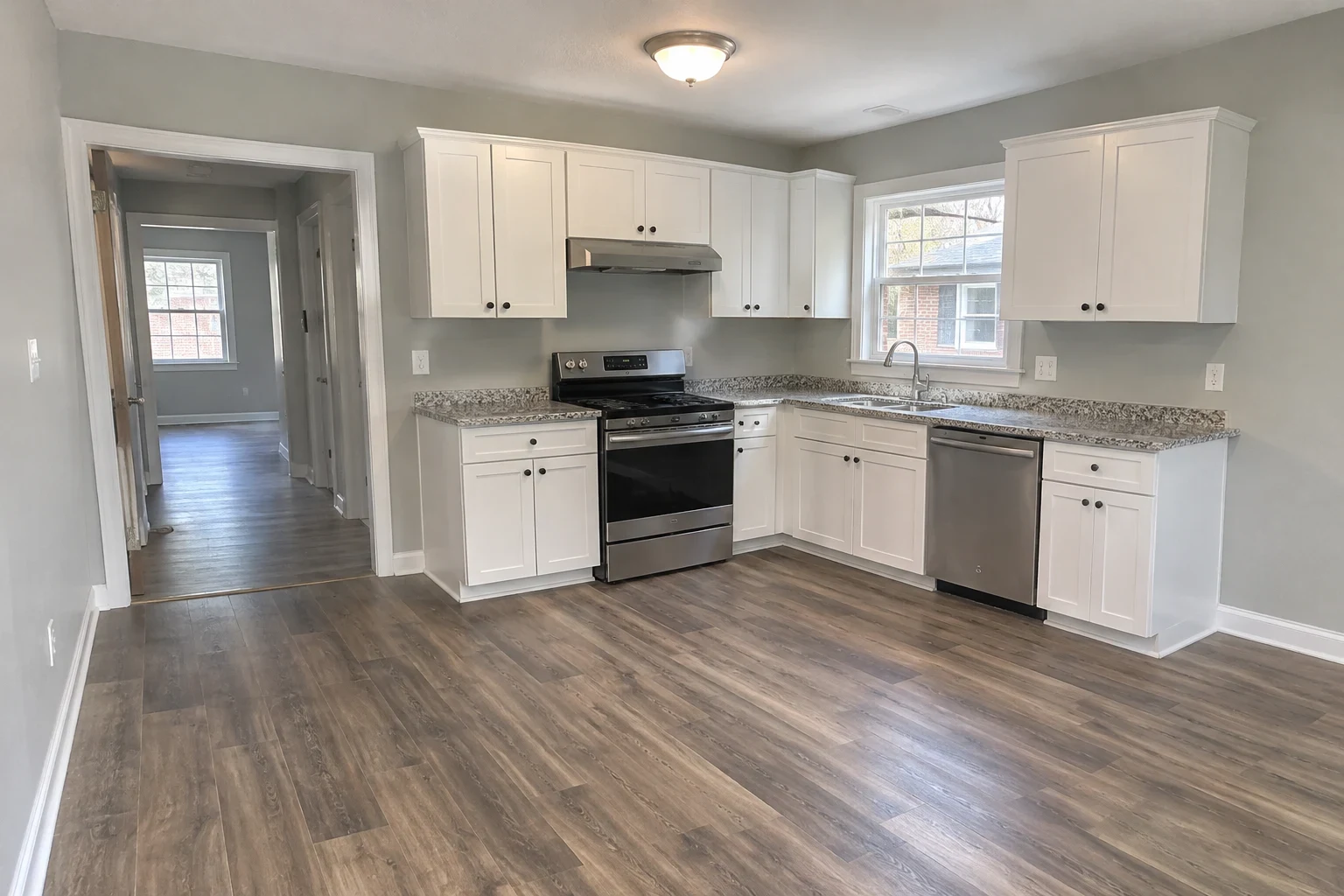
When the area is clean and dry, we can move straight into repairs and rebuild, matching trim, drywall finish and flooring so the room looks the way it did.
What affects the cost
Every backup is different, so we price the work after seeing it. You get a written, line-item estimate that shows what each step covers, and we explain anything that changes once walls are opened.
- How far the sewage spread
- Square footage matters, but so does how high water wicked up the walls and how many rooms it reached.
- Materials that must be removed
- Finished basements with carpet, built-ins and insulated walls involve more removal and disposal than bare concrete.
- How long it sat
- Sewage left for a day or more soaks deeper into wood and drywall, which adds cleaning, removal and drying time.
- Access and contents
- Tight crawlspaces and rooms full of stored belongings take longer to work in safely.
Sewage cleanup questions
- Is it safe to stay in the house during cleanup?
- In many cases, yes, provided the backup stayed in one area and we can seal it off. Small children, older family members and anyone with a weakened immune system should keep clear of the affected rooms until disinfection is finished. After the inspection we will tell you plainly what we recommend.
- Can my carpet be cleaned instead of replaced?
- Carpet and pad that soaked up sewage are nearly always thrown out, since there is no dependable way to disinfect them. Tile, sealed concrete and other hard flooring can usually be cleaned and kept in place.
- Will homeowners insurance cover a sewage backup?
- That comes down to the wording of your policy. Plenty of standard policies only cover backups if you added a sewer and drain rider. We work with most major insurance companies, and we can hand over our photos, moisture readings and an itemized scope of work. The coverage call itself belongs to your adjuster.
- Does the sewer line need to be fixed first?
- The blockage has to be cleared before we finish, or the next flush can bring the problem straight back. We can begin containment and extraction right away, then line up the final steps around the line repair.
- What about mold afterward?
- Drying the structure promptly is the best way to prevent it. If we open a wall and find growth that was already there, we treat it through our mold remediation process before any rebuilding begins.
Get the backup handled properly
Sewage is one problem worth leaving to people with the right equipment. We serve Highland Springs, Sandston, Mechanicsville and the surrounding area, and the first visit is a free on-site inspection.