ServicesDrying and Dehumidifying
Drying and Dehumidifying in Highland Springs
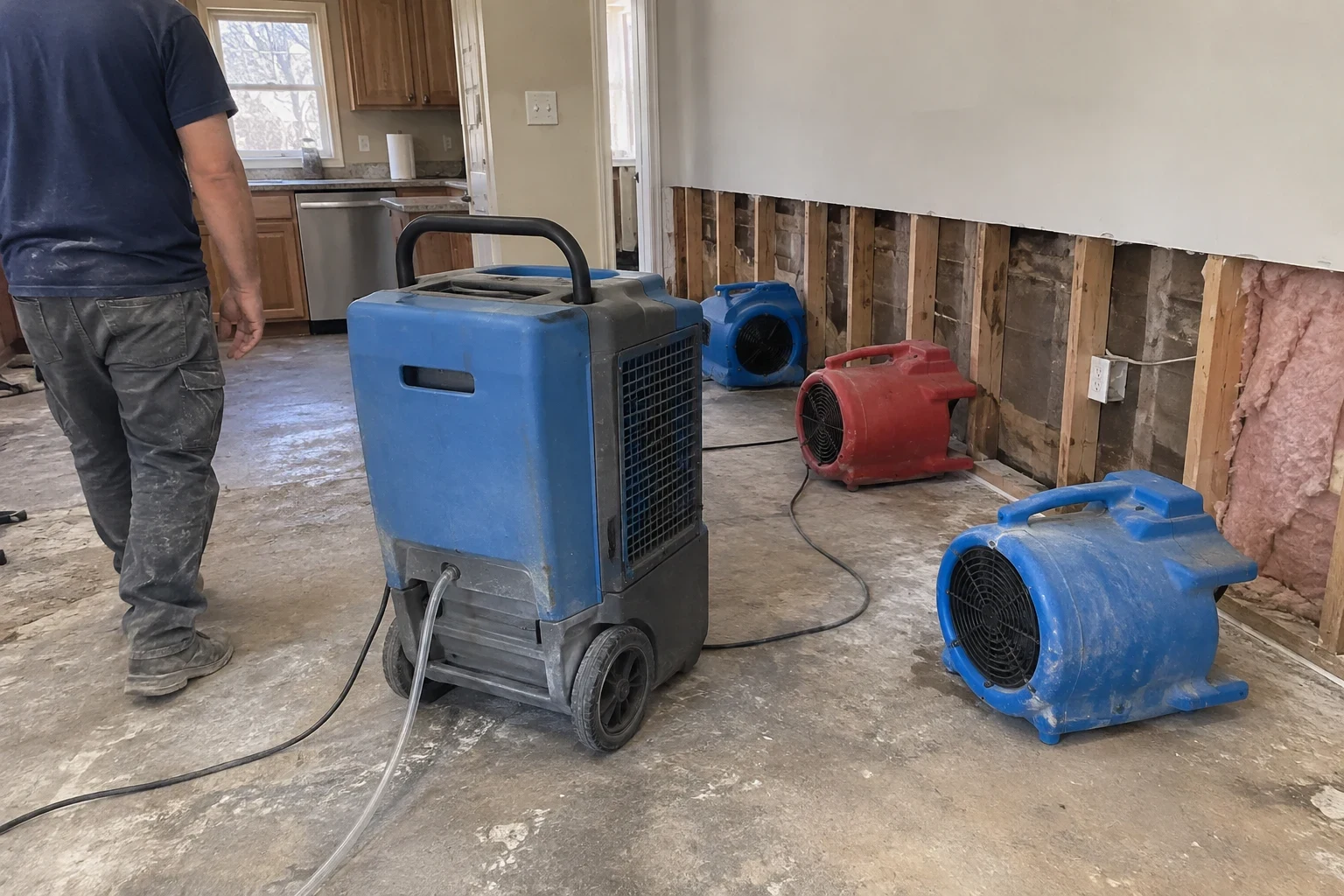
Once standing water is gone, the moisture left in drywall, subfloor and framing does the slow damage. We set air movers and dehumidifiers, check readings every day and keep the equipment running until your home is dry by measurement, not by touch.
What drying actually involves
Water extraction removes what you can see. Drying deals with what has soaked in: the gypsum core of drywall, the bottom plate of a wall, the underside of hardwood, the pad beneath carpet. Left alone, those materials can stay wet for weeks, and that is when finishes warp, paint lifts and mold finds a foothold.
We treat drying as a measured process. Each wet room gets mapped readings on the first day, a drying plan built around the materials involved, and a visit every day to see what has changed. Equipment comes out when the numbers reach the dry standard for that material, not on a fixed calendar.
Central Virginia summers are humid, so open windows and a box fan rarely finish the job. Closing the room and running proper dehumidification pulls moisture out of the air faster than your walls and floors can soak it back up.
The work behind a proper dry-out
Tracing where the water went
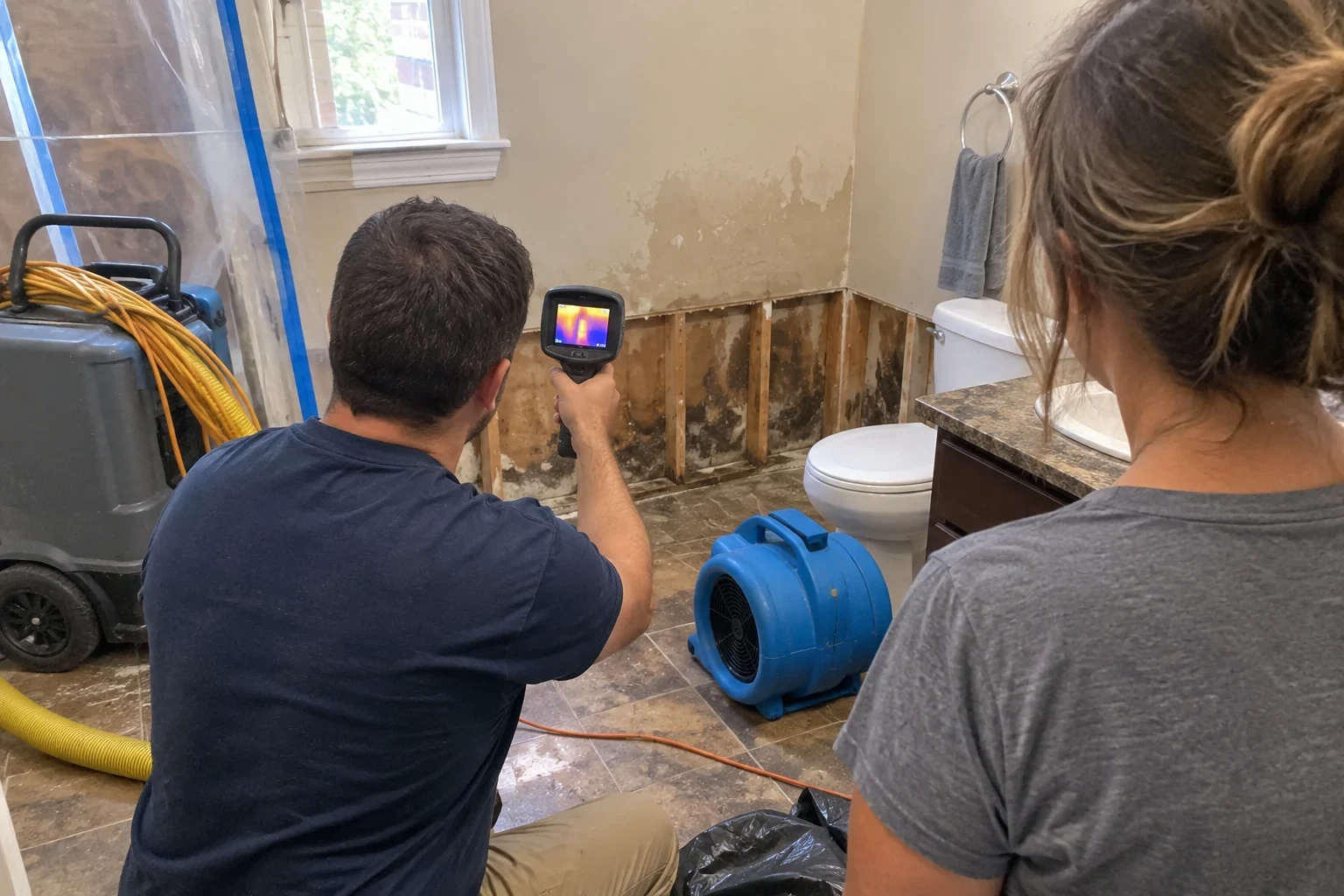
Water rarely stops where the puddle did. A thermal camera and two kinds of moisture meter, one that probes and one that reads through the surface, show us how far it spread behind baseboards and beneath flooring. We sketch the affected area for you and note each starting reading on it.
Air movers set for each room
We aim fans along the base of walls and across open floor so dry air keeps passing over damp surfaces. Some spots dry ahead of others, so the fans get shifted at every visit.
Refrigerant dehumidifiers
These machines pull water from the air and pump it to a drain on their own, so you never have a bucket to empty. Each one is matched to the size of the room and how much material is wet.
Drying inside the wall
If the drywall is damp but still firm, we may drill a few small holes near the floor, where the baseboard will cover them, and blow dry air into the cavity. When the board is soaked through or the insulation is wet, we show you the numbers and explain why removal is the better choice.
Wood floors and subfloor
Specialized mats draw moisture up through hardwood gradually, which helps keep boards from cupping or splitting. Some floors respond and some do not, and we give you a straight answer once we see how yours behaves.
A written log for every day
At each visit we note the readings, temperature and humidity, the equipment running and a set of photos. Adjusters rely on that record, and a copy stays with you.
Signs your home still needs drying
- Swelling baseboards
- MDF baseboards and door casings swell and split at the seams when the wall behind them stays wet. Caulk lines pulling away are often the first clue.
- A musty smell days later
- An earthy odor that shows up a day or two after a leak usually means moisture is trapped in carpet pad, drywall or a closed cavity.
- Cupping or soft flooring
- Hardwood boards with raised edges, or laminate that feels spongy underfoot, are holding water from below.
- Bubbling paint or a creeping stain
- Paint that blisters, or a water line that keeps climbing the wall, tells you the drywall is wicking moisture upward.
- Damp, heavy air
- Condensation on windows or a room that feels clammy after a storm or plumbing leak points to humidity your HVAC system cannot remove on its own.
How a drying job runs
- 1
Free inspection and readings
After your call we are on site in 60 mins or less. We take readings in every affected room, find where the water went and explain what is wet and what is not.
- 2
Protection and setup
We lay floor protection on walkways, set the air movers and dehumidifiers, and route cords so they are out of the way. Before we leave, we tell you which outlets the equipment is using and what to expect for noise.
- 3
Daily monitoring
We return each day to take readings, reposition equipment and log progress. If an area is not drying as it should, we change the plan and tell you why.
- 4
Confirming dry and handing off
We compare final readings to an unaffected area of your home to confirm materials are back to normal, then remove the equipment and clean up. If drywall, trim or flooring needs replacing, our repairs and rebuild work can pick up from there.
What affects the cost of drying
Drying is priced by what it takes: how much equipment, for how many days, across how much material. We walk you through the plan before setup and give you a written line-item estimate so nothing appears later as a surprise. We work with most major insurance companies and can share our daily logs with your adjuster.
- Size of the wet area
- One bathroom needs a fan and a small dehumidifier. A finished basement or several rooms needs far more equipment running at once.
- Materials involved
- Drywall and carpet dry fairly quickly. Hardwood, plaster and concrete slabs hold water longer and add days to the job.
- How long water sat
- Water caught within hours stays near the surface. Water that sat over a weekend has wicked deeper and takes longer to pull out.
- Type of water
- A clean supply line leak can go straight to drying. Storm water or a sewer backup needs flood cleanup or sewage cleanup first, which adds steps before drying begins.
- Removal needed
- Pulling soaked carpet pad, insulation or lower drywall adds labor but often shortens drying time for the rest of the room.
Drying and dehumidifying questions
- How long will drying take?
- Many rooms with drywall and carpet reach dry standard in three to five days. Hardwood, plaster and slab floors can take longer. We give you an estimate after the first readings and update it each day as the numbers move.
- Can I dry it myself with fans and a store-bought dehumidifier?
- For a small spill caught quickly, sometimes. For water that reached walls or got under flooring, household units usually cannot pull moisture fast enough, and the surface can feel dry while the cavity behind it is still wet. A meter reading is the only way to know.
- Can we stay in our home while the equipment runs?
- In most cases, yes. The fans make a steady hum and the rooms run warm, so many families close the door and use other parts of the house. We will tell you if conditions make staying away the better choice.
- Will you have to remove my drywall or carpet?
- Only when the readings or the type of water call for it. We try to dry in place first, and when something has to come out, we show you why before we touch it.
- Does thorough drying prevent mold?
- Drying to standard within the first few days is the best defense, because mold needs sustained moisture to grow. If we find growth that was already there, we will explain it and talk through mold remediation separately.
- Will my insurance cover drying?
- Sudden water damage is often covered, though every policy is different. We are not your adjuster, but we explain the process, document every day of drying and work with most major insurance companies.
Start drying before the damage spreads
Every day moisture sits, more of your home soaks it up. Call and we will come out, take readings and tell you plainly what needs drying and what does not.