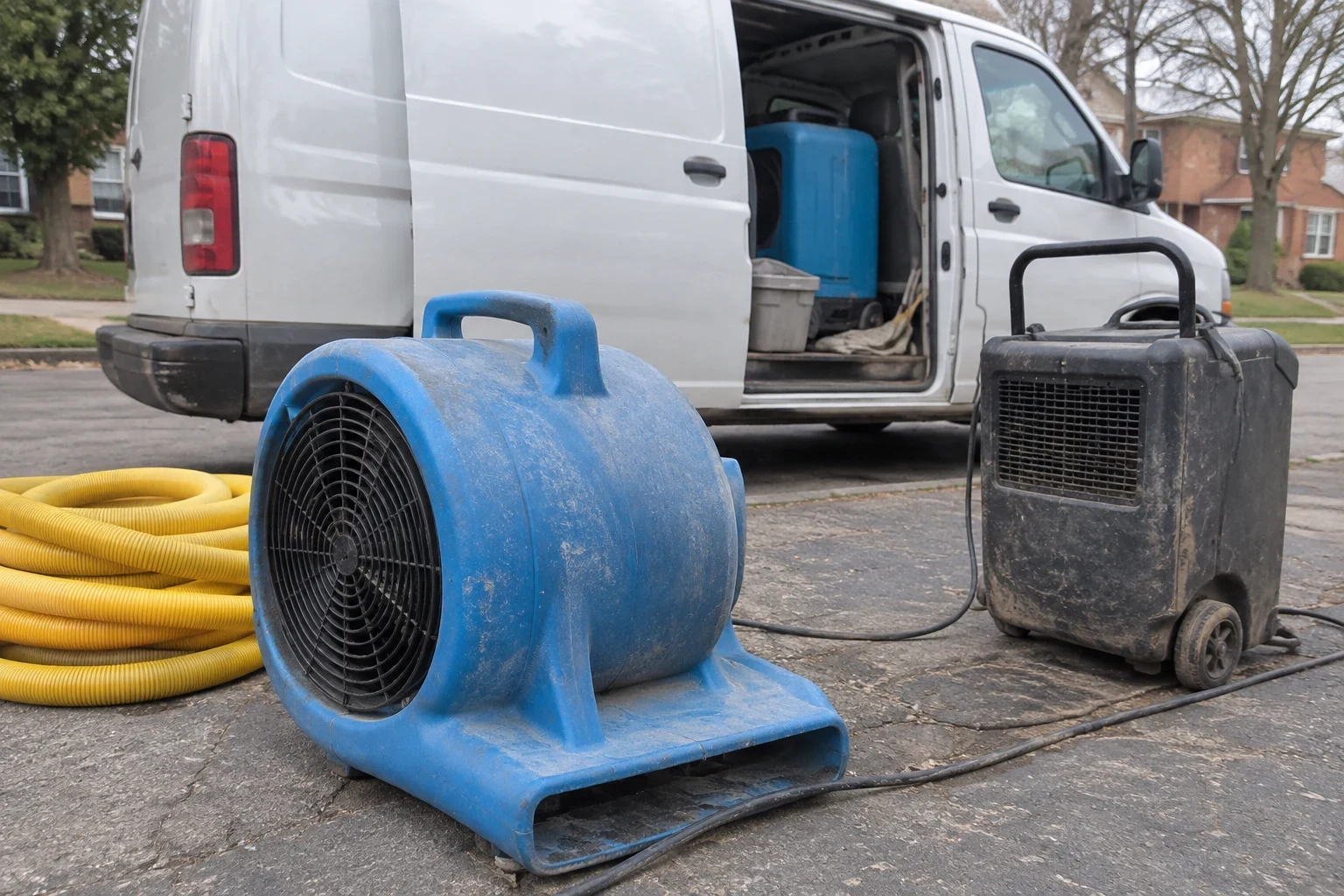
Water Damage Help in Highland Springs and Nearby Towns
We work in homes across Highland Springs and the towns around it, from the first call after a storm to the final coat of paint. Wherever you live in our area, you get the same careful process: stop the water, dry the structure properly and put your home back right.
The Towns We Cover
Our base is Highland Springs, and most of our work happens within a short drive of it. We are regularly in Sandston, East Highland Park, Montrose and Laurel. We also travel north to Mechanicsville, Chamberlayne and Lakeside, and south to Bensley and Meadowbrook. Homes in Richmond itself are part of our area too.
Distance matters most in the first hours after water gets in, which is why we keep our area close. We are on site in 60 mins or less, so extraction and drying can start before water wicks into drywall, subfloor and framing. If you are unsure whether your street falls inside our area, ask when you call and we will tell you plainly.
Towns we cover from Highland Springs
- Highland Springs
- Mechanicsville
- East Highland Park
- Montrose
- Sandston
- Richmond
- Lakeside
- Bensley
- Chamberlayne
- Meadowbrook
- Laurel
Not on the list? Call (804) 583-2810 and ask.
What Homes Across the Area Have in Common
- Housing age and construction
- Much of the housing around Highland Springs and the Richmond suburbs dates from the middle of the last century: brick ranches, Cape Cods and split-levels, many built over crawlspaces. Older supply lines, aging water heaters and original subfloors are common. Plaster, solid hardwood and particleboard each hold water differently, so we check what your home is built from before we choose how to dry it.
- Weather and storm season
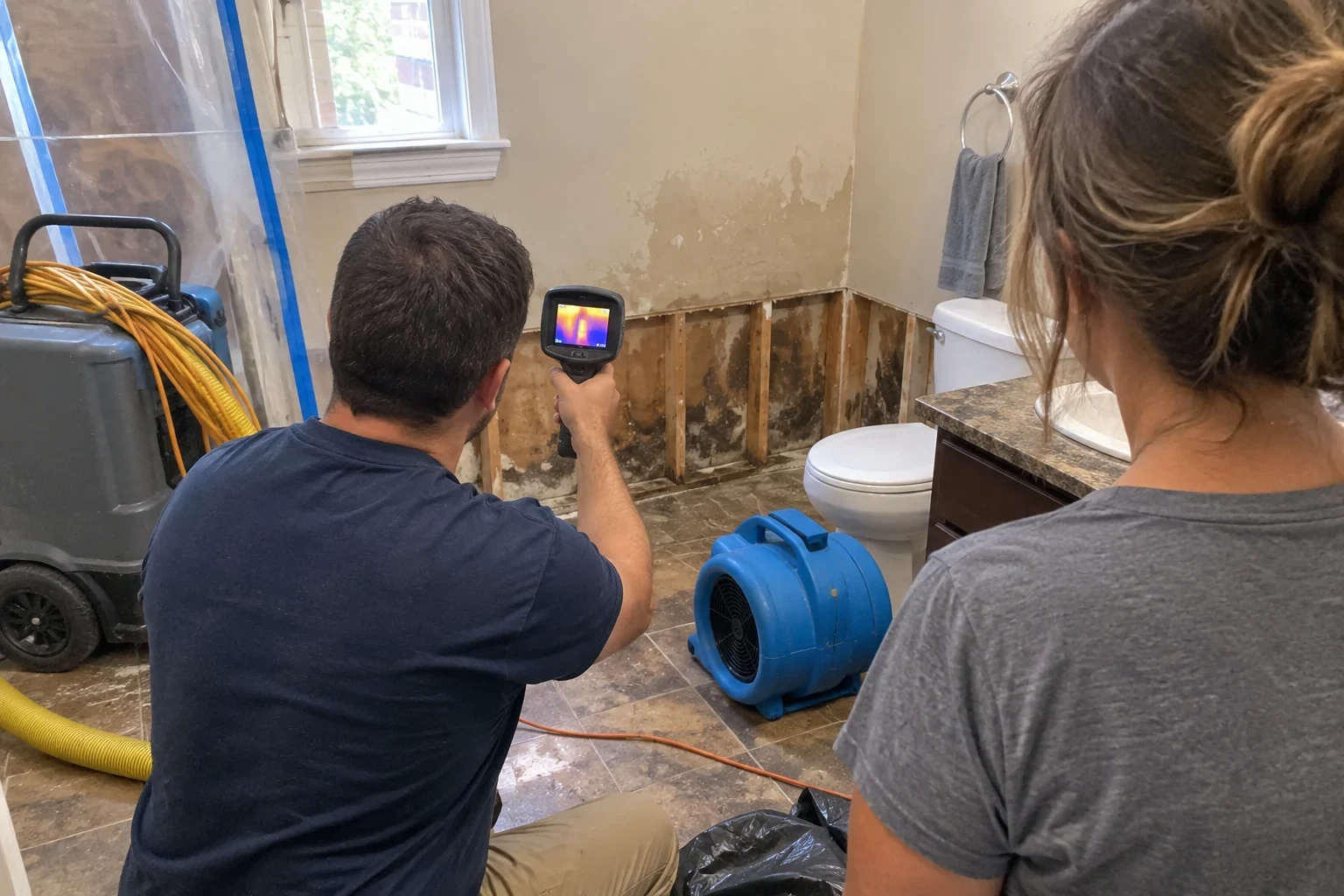
- Central Virginia sees heavy summer thunderstorms, the remnants of tropical systems in late summer and fall, and the occasional winter freeze that splits a pipe. Long humid stretches slow natural drying, and damp materials left alone tend to grow mold. We measure moisture with meters and keep dehumidifiers running until the readings say the structure is dry, not just until surfaces feel dry.
- Crawlspaces and runoff
- Clay soil and low spots in a yard can push storm runoff toward a foundation. Water in a crawlspace often goes unnoticed until floors feel soft or a musty smell rises. We look under the house during the inspection, not only in the room where you first saw water.
- Permits and insurance
- Extraction and drying usually need no permit. Rebuild work that touches structure, wiring or plumbing generally goes through the building office of the county your home sits in, and we pull those permits as part of repairs and rebuild. We work with most major insurance companies, and we photograph damage and record moisture readings so your adjuster sees the same picture we do.
Water in Your Home Right Now
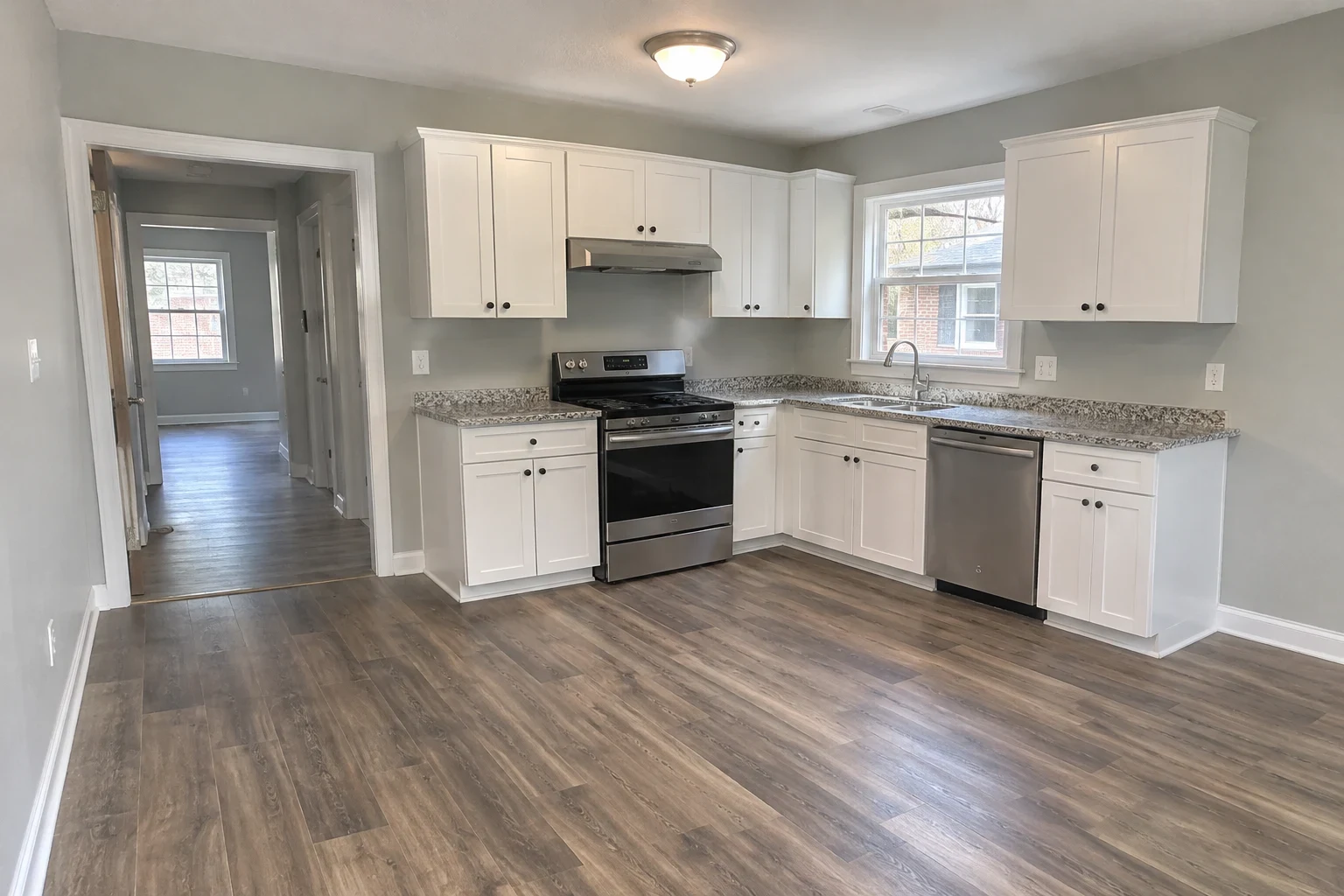
Tell us where you are and what you are seeing. We answer day and night for emergency water damage response, and the on-site inspection is free.