ServicesFlood Cleanup
Flood Cleanup in Highland Springs
When storm water comes in from outside, it carries soil, bacteria and debris with it. We remove the water and silt, take out what can't be saved, sanitize what can, and set up drying so your home is clean and ready for repairs.
Cleaning up after water comes in from outside
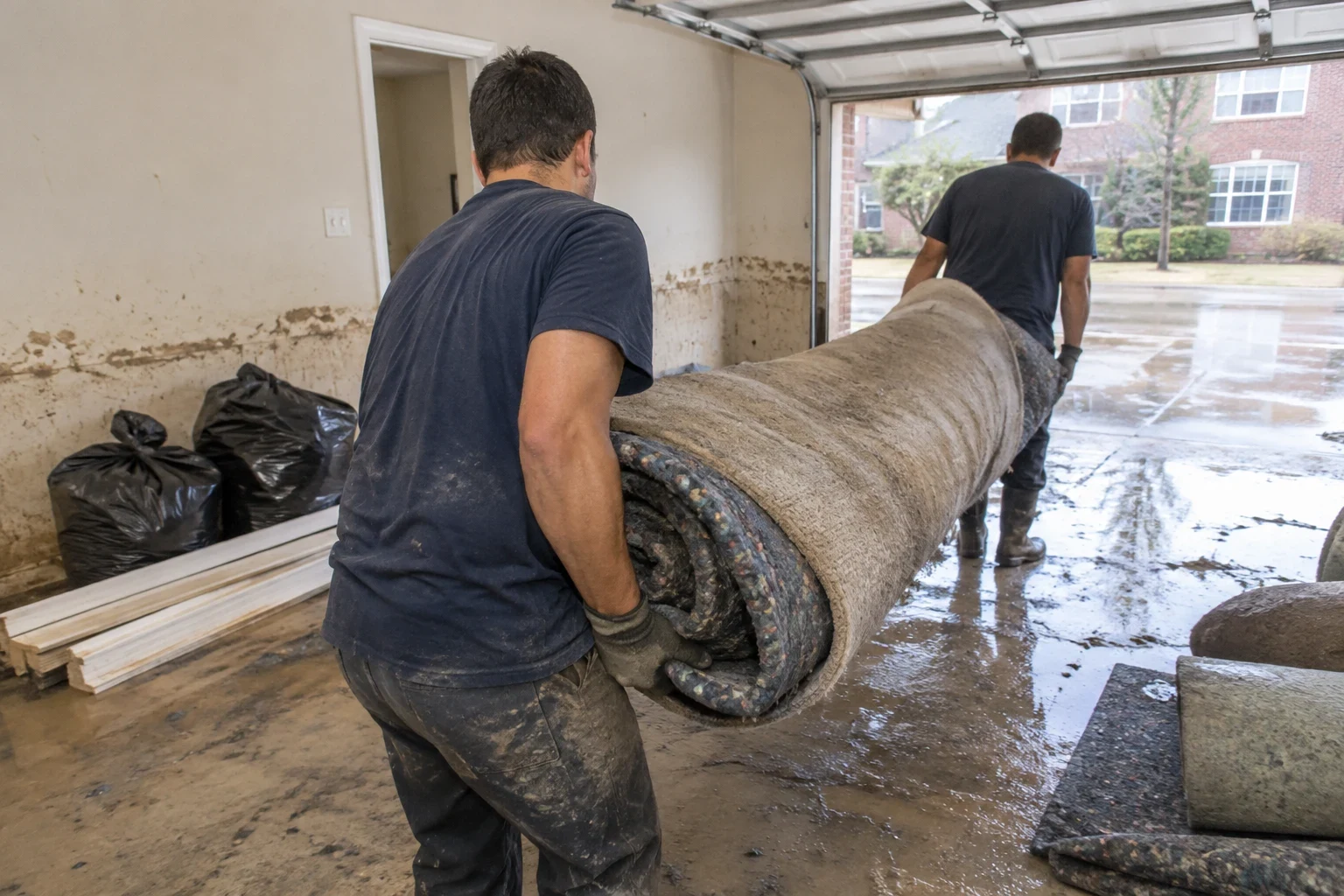
When rain, runoff or rising groundwater gets into your home, it brings soil, bacteria and debris along with it. A creek or ditch spilling over, water pushing in under an exterior door, a crawl space or basement filling from below: all of it is handled as contaminated water from the first hour. That means far more than running a pump. We clear and wash out the mud and silt, remove wet drywall and insulation, and clean and treat every surface the water reached before anything gets sealed back in.
Around the Richmond area, this kind of damage most often follows hard summer thunderstorms or what is left of a tropical storm moving through. We begin with a free on-site inspection, and we are on site in 60 mins or less. Together we walk the affected rooms, we show you how far the water climbed inside the walls, and we explain which materials need to come out and which can be kept.
Water from a clean source, like a split supply line under a sink, is usually a better match for our water extraction service. Water that came up through a floor drain or a toilet calls for sewage cleanup instead.
What our flood cleanup covers
- 01
Water and silt removal
Pumps take out standing water, then we shovel and squeegee the mud layer. Silt left behind holds moisture and bacteria, so floors are washed down until they are actually clean, not just dry.
- 02
Flood cuts on wet walls
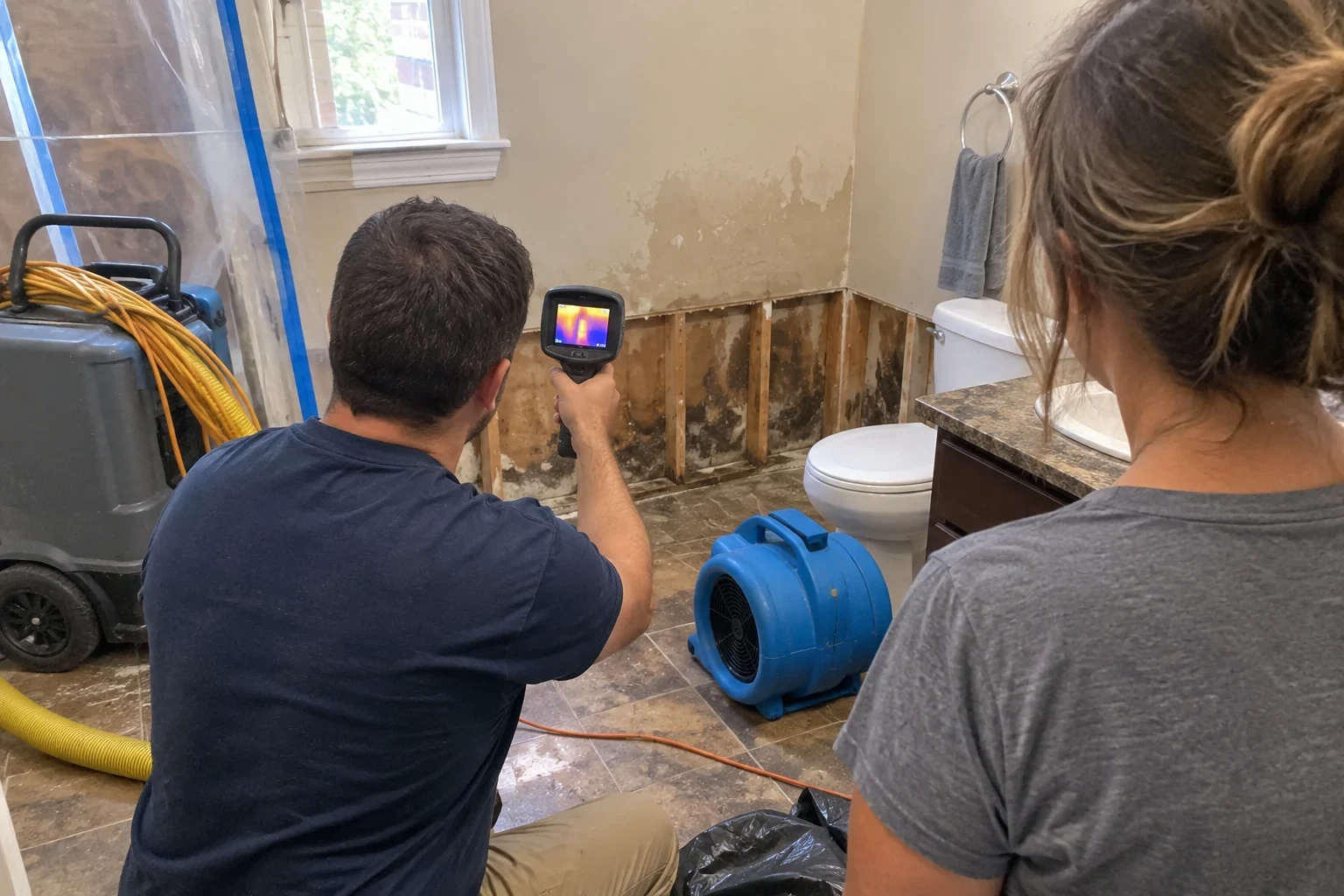
Drywall that wicked floodwater is cut out in a straight line above the wet mark, usually a foot or more. That removes the contaminated board and the soaked insulation behind it, and leaves a clean edge for the rebuild.
- 03
Flooring and carpet removal
Carpet and pad that sat in floodwater are not cleaned and reused. We remove them, along with laminate and swollen subfloor where needed, and check hardwood and tile for water trapped underneath.
- 04
Cleaning and antimicrobial treatment
Studs, slab, joists and remaining surfaces are cleaned and treated with an antimicrobial before drying begins. This lowers the chance of mold taking hold inside wall cavities.
- 05
Sorting your belongings
We help you separate what can be cleaned, what should be discarded and what needs a closer look. Discarded items are photographed for your records.
- 06
Drying setup and monitoring
Air movers and dehumidifiers go in once the space is open and clean. Our drying and dehumidifying work continues until moisture readings in the framing are back to normal.
Questions about Flood Cleanup?
Call(804) 583-2810Signs your home needs flood cleanup
Water came in from outside
If water entered through doors, window wells, foundation vents or the slab after rain, treat it as floodwater even if it looked clear.
A line of mud on walls or cabinets
A brown tide line shows how high contaminated water reached. Everything porous below it is likely to need removal.
Water in the crawl space
Crawl spaces flood quietly. A wet vapor barrier, sagging insulation between joists or a musty smell in the rooms above are reasons to have it checked.
Swollen baseboards and cabinet bases
Particleboard cabinet boxes and MDF trim swell and crumble once soaked. When they do, the drywall behind them is usually wet too.
An odor that lingers
An earthy or sour smell a day or two after the water recedes means wet material is still in place and bacteria are growing.
How a flood cleanup day runs
- 1
Safety check and inspection
We check for electrical and structural hazards first, then map moisture with meters and thermal imaging. You hear plainly what we found before any work starts.
- 2
Documentation
We photograph rooms, waterlines and damaged materials and record moisture readings. These records support your claim, and we work with most major insurance companies, though your adjuster makes the coverage decision.
- 3
Removal and cleanout
Water, silt and unsalvageable materials come out. Floors and walkways outside the work area are covered, and debris is bagged and hauled away rather than left in your yard.
- 4
Clean, treat and dry
Exposed framing and slab are cleaned and treated, then drying equipment is placed. We return to take readings until they confirm the structure is dry.
- 5
Hand-off to repairs
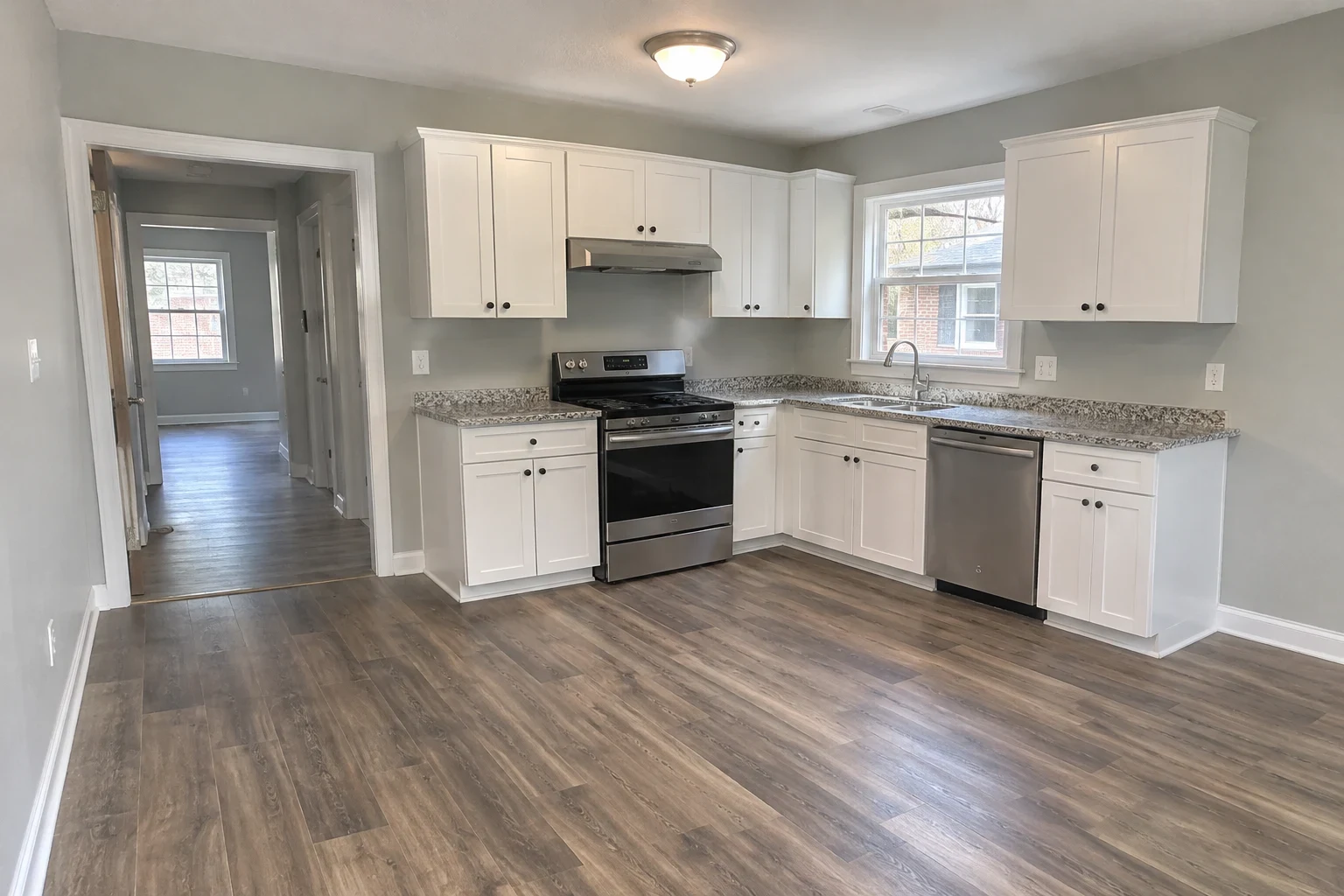
Once everything is dry, we walk you through what needs rebuilding. Our repairs and rebuild crew can carry on from there, so the people who opened the walls are the ones who close them.
What affects the cost of flood cleanup
Every flood is priced after we have seen it, because the depth of the water and what it reached matter more than square footage alone. Your estimate is written and itemized, so you can see where each part of the cost comes from and share it with your insurer.
- How high the water rose
- An inch on a slab floor is a different job from water two feet up the walls. Height decides how much drywall, insulation and cabinetry must come out.
- Amount of mud and debris
- Heavy silt takes hand labor and repeated wash-downs. A light film takes far less.
- Materials in the affected rooms
- Finished basements, built-ins and solid hardwood take more care to remove or save than bare concrete or vinyl plank.
- Crawl space access
- Low clearance, a torn vapor barrier or wet insulation hanging from joists adds time and protective work.
- Length of drying
- Dense materials like plaster, hardwood and block walls give up moisture slowly, which keeps equipment running longer.
Questions about flood cleanup
Will my insurance pay for flood cleanup?
Coverage turns on two things: the source of the water and the type of policy you carry. Surface water from outside is often excluded from a standard homeowners policy and handled instead under a separate flood policy. We work with most major insurance companies and keep careful records of the damage, but the adjuster makes the coverage call, so it helps to contact your agent early.
Is it safe to clean up floodwater on my own?
With gloves and boots, a thin layer of water on tile or concrete is manageable. Once floodwater has soaked into drywall, insulation, carpet or a crawl space, those materials have to be removed and the framing treated and dried to measured readings. When that step is skipped, mold tends to show up inside the walls a few weeks later.
How many days does flood cleanup usually take?
For a few rooms, removal and cleanout typically take a day or two. Drying runs for several more days, depending on what the walls and floors are made of and how humid the weather is. We take readings at every visit and let you know when the structure is ready for repairs.
Do we have to move out while you work?
Usually not. When the water stayed in a crawl space, a basement or a handful of rooms, most families remain at home during the work. We will tell you if staying is a poor idea, for example if water reached the electrical panel, living spaces are badly contaminated, or the HVAC system needs to be shut off.
What happens if mold is already growing?
Floodwater that stood for more than a day or two can leave growth that we uncover during the cleanout. We contain those areas and treat them as mold remediation before drying and repairs move ahead.
Can you come out after hours or on a weekend?
Yes. Storms keep their own schedule, so our emergency water damage response is available around the clock. Call while the water is still coming in or as soon as it drops, and we will talk you through what to do until we arrive.
Get the water out and your home drying
The sooner wet materials come out, the less there is to rebuild. Call and we will walk through your home, show you what we find and lay out the next steps.