ServicesWater Extraction
Water Extraction in Highland Springs
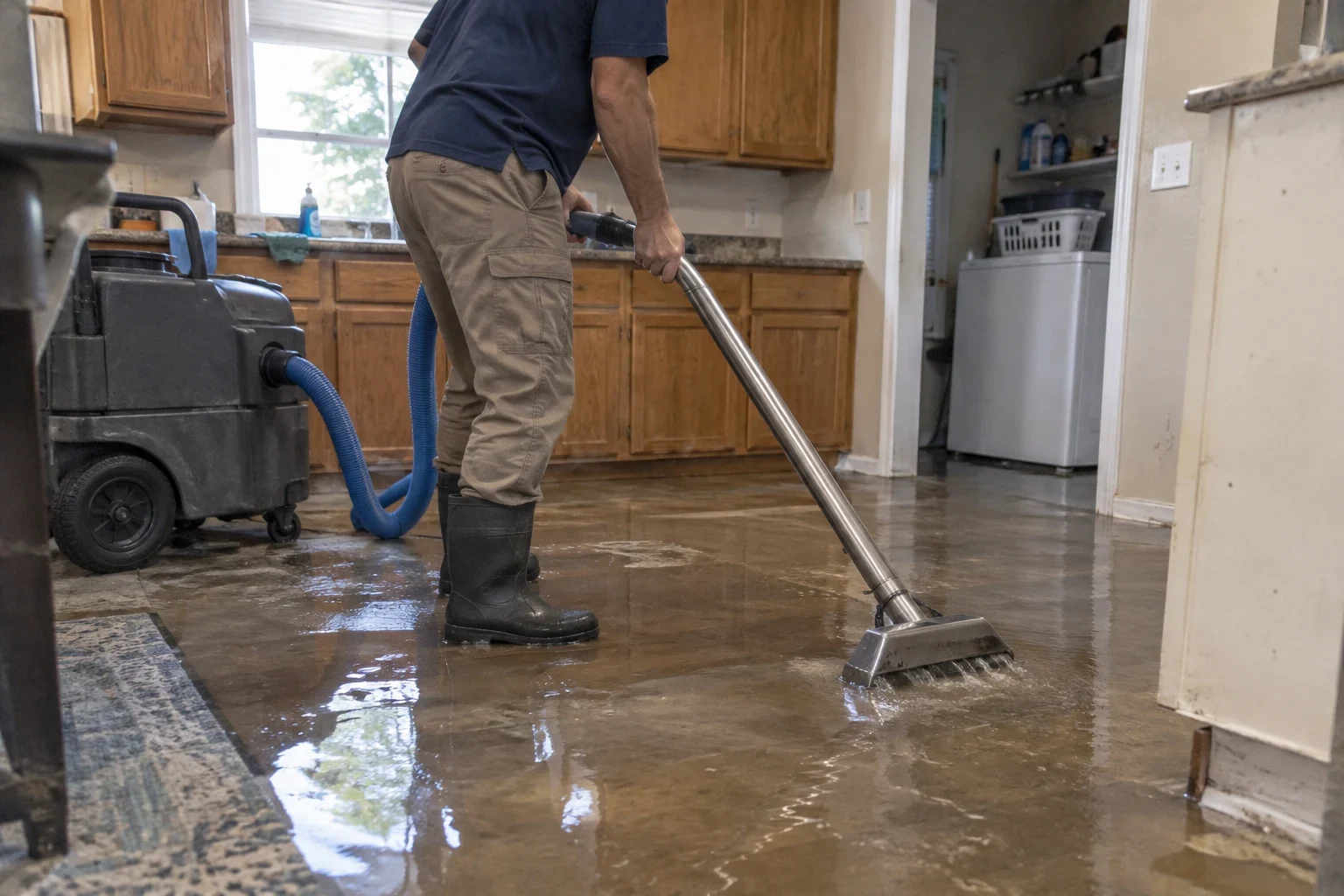
When water is standing on your floors or soaking into carpet, the first hours decide how much of your home can be kept. We remove the water with powerful extraction equipment, trace where it traveled, and set up the next step before we leave.
Getting the water out before it settles in
Water extraction is the physical removal of standing and absorbed water from your home. It comes before drying, and it matters more than most people expect. An extraction wand pulls out in an hour what dehumidifiers would need days to draw from the air. The less water left in the carpet pad, subfloor and drywall, the shorter the drying and the more of your original flooring and trim we can save.
It is the right call after a burst supply line, a failed water heater, an overflowing washer, or rain that finds its way in during a storm. If the water came from outside and carried soil, our flood cleanup service adds the decontamination that work needs. If it backed up from a drain or toilet line, that is sewage cleanup, which follows its own protocol.
For urgent losses our standard is simple: on site in 60 mins or less. Calling early, while the water is still on the surface, is almost always cheaper than waiting to see whether it dries on its own.
What our water extraction covers
Safety and source check
Before any equipment runs, we confirm the water has stopped and check whether outlets, cords or appliances sit in the wet area. If a shutoff valve needs closing, we show you where it is.
Truck-mounted and portable units
Open rooms get high-suction extraction. Bathrooms, closets and stairs get portable extractors and hand wands that reach into corners without dragging hoses across finished floors.
Carpet and pad decisions
Carpet can often be extracted and kept. Soaked pad usually cannot, because it holds water like a sponge and costs little to replace. We explain which applies to your floors before we pull anything up.
Moisture mapping
Moisture meters and thermal imaging show where water has wicked under baseboards, into drywall and beneath hardwood. Those readings shape the drying plan.
Crawl spaces and lower levels
Many homes around Highland Springs sit over crawl spaces where storm water pools. We pump it out and check insulation and floor joists for saturation.
Furniture moved and protected
We lift furniture onto blocks or foam to stop stains and rust marks, and move rugs, boxes and keepsakes to a dry room with your approval.
Signs you need water extraction now
Carpet that squishes underfoot
If pressing on carpet brings water to the surface, the pad and the subfloor below are already wet.
Floors cupping or lifting
Hardwood boards that rise at the edges, or vinyl and laminate that bubble, are taking on water from beneath. Fast extraction gives them the best chance of settling back.
Ceiling stains or drips
A spreading brown ring or a sagging spot means water is sitting above the drywall and will keep moving down.
A musty smell after heavy rain
An earthy odor near an exterior wall or from the crawl space often points to water you have not found yet. Mold can begin within a day or two in those conditions.
Water under the house
Standing water in a crawl space raises humidity throughout your home and softens wood over time, even if every room upstairs looks dry.
How extraction day goes
- 1
Your call and our arrival
Tell us what happened and where you see water. When we arrive, we walk the affected rooms with you as part of a free on-site inspection before any work begins.
- 2
Photos and a written scope
We photograph the damage and record moisture readings, then explain in writing what we plan to remove and why. Those records help if you decide to file a claim.
- 3
Extraction
We protect walkways and nearby floors, then remove standing water first and absorbed water second, making repeated slow passes over carpet and hard floors. Wet pad and materials that cannot be saved are bagged and taken away.
- 4
Readings and next steps
After extraction we measure again and show you the numbers. Most homes then need drying and dehumidifying, and if you approve, we place air movers and dehumidifiers before we go.
What affects the cost of extraction
Water extraction has no flat price, because every leak travels its own route through a house. After the inspection, you get a written, line-item estimate showing what each part of the work covers. Most major insurance companies are ones we already work with, so we can explain how a claim tends to move from first call to final payment. What your policy covers is still your adjuster's decision.
- How much area is wet
- A single soaked bathroom and a finished lower level are very different jobs. The square footage and the number of rooms involved set the starting point.
- Where the water came from
- Water from a broken supply pipe is relatively clean. Water that drained out of a washer or dishwasher carries soap, food and lint, so it calls for added cleaning and more protective gear.
- Flooring layers
- Carpet over pad, hardwood over plywood, or tile over a slab each give up water at a different rate and may need different tools.
- Access
- Tight crawl spaces, long stair runs and heavy furniture all add time to the job.
- How long it sat
- Water left in place for hours has time to climb into walls and seep into subfloor, which carries the work well past the surface.
Water extraction questions
Something not covered here? (804) 583-2810
Can I just use a shop vac?
For a little water sitting on a tile floor, a shop vac is fine. What it cannot reach is the water held in carpet pad, subfloor and the lower edge of drywall, and that trapped moisture is what causes odor and mold weeks later. Once more than a small spot is wet, professional extraction with moisture readings is the safer route.
Will my hardwood floors be saved?
Often, if the water is removed quickly. We extract from the surface, check readings through the boards, and then dry them slowly so they flatten without cracking. If boards have already cupped badly or delaminated, we tell you plainly and talk through repairs and rebuild.
Does homeowners insurance pay for water extraction?
Many policies cover sudden water damage such as a burst pipe, though slow leaks and some kinds of flooding can be handled under different terms. Most major insurance companies are familiar names to us, and the dated photos and moisture readings we record on the job are the kind of documentation a claim usually asks for. The coverage decision rests with your adjuster.
Do I need to leave my home during extraction?
Usually not. The equipment is loud, and we will ask you to keep children and pets away from the work area. If the water came from a sewage line, we will advise you about staying out of the affected rooms.
How long does water extraction take?
A single room may take an hour or two. A whole lower level or a flooded crawl space can take most of a day. Drying afterward runs longer, typically several days, and we check progress with meters throughout.
Get the water out while more can be saved
Describe what happened and where the water is, and we will send someone out to look it over. The inspection costs nothing, and our recommendation is in front of you before any work begins.